Article-At-A-Glance
- Sony E-Mount and Canon RF offer the best balance of wide aperture options and native lens selection for capturing the night sky
- Lens mounts with shorter flange distances provide greater flexibility through adapting lenses from multiple systems
- The right mount choice depends on your specific astrophotography goals – whether deep sky, wide-field Milky Way, or planetary imaging
- Quality adapters can expand your lens options without sacrificing electronic functionality when chosen carefully
- Weight considerations become critical when pairing your camera system with star tracking mounts for longer exposures
Capturing the cosmos requires more than just technical skill and patience—it demands the right equipment. While discussions about the best camera sensors and tracking mounts dominate astrophotography forums, your lens mount choice fundamentally determines which optics you can use to photograph the stars. Making the right mount decision now can save you thousands of dollars and countless hours of frustration down the road.
Why Your Lens Mount Makes or Breaks Your Astrophotography
Astrophotography pushes optical systems to their absolute limits. Every photon counts when you’re capturing light that has traveled millions or even billions of years to reach your sensor. Your lens mount forms the critical connection between your camera body and the glass that gathers this ancient starlight. A mount that offers access to fast, wide aperture lenses with minimal coma distortion will dramatically outperform systems limited to slower glass.
The mount you choose determines not just which native lenses you can use, but also which adapted lenses from other systems might work with your camera. Some mounts, particularly those with shorter flange distances, offer significantly more flexibility than others. For night sky photographers, this flexibility translates directly into creative possibilities and image quality.
Understanding Lens Mounts for Star Photography
Before diving into specific recommendations, let’s establish a clear understanding of what lens mounts are and why they matter particularly for astrophotography.
What Exactly Is a Lens Mount?
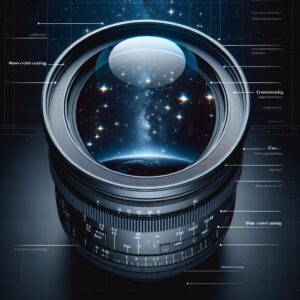
A lens mount is the physical interface between a camera body and lens. It’s not just a mechanical connection point but also an electronic pathway that enables communication between these two critical components. Modern mounts transfer data about aperture settings, focus positions, and stabilization needs while physically securing the lens in perfect alignment with the sensor. For those interested in astrophotography, understanding the best camera lenses can enhance your experience.
For astrophotographers, the mount’s diameter, electronic contacts, and flange focal distance (the space between the lens mount and the sensor) dramatically impact what’s possible with your system. Larger diameter mounts allow for more substantial glass elements and potentially faster apertures—both crucial for gathering the faint light of distant celestial objects.
Most camera manufacturers have developed proprietary mounting systems that lock photographers into their ecosystem, though third-party lens makers like Sigma, Tamron, and Samyang often produce versions of their lenses for multiple mount types.
How Lens Mounts Affect Image Quality
When photographing stars, image quality differences between mount systems become magnified. The primary technical factors where your mount choice impacts astrophotography performance include light-gathering capability, corner sharpness, and coma control.
Mounts that support lenses with larger maximum apertures (smaller f-numbers) gather more light in less time. This means shorter exposures, which reduces the risk of star trailing and minimizes noise. For many astrophotographers, the difference between an f/3.5 lens and an f/1.8 lens can be the difference between a mediocre and breathtaking image.
Modern mount designs with larger throat diameters also tend to support lenses with better corner performance—crucial when capturing the Milky Way across a wide field. Stars in the corner of your frame will reveal optical flaws faster than almost any other photographic subject.
Mount Comparison: Light Gathering Capability
Sony E-Mount: Excellent (supports multiple f/1.4 wide-angle options)
Canon RF Mount: Excellent (supports multiple f/1.4 wide-angle options)
Nikon Z Mount: Very Good (growing selection of fast wide-angles)
Micro Four Thirds: Good (compact system, but smaller sensor)
Canon EF Mount: Very Good (extensive selection through third parties)Native vs. Adapted Mounts: The Critical Differences
When choosing a mount system, you’ll often hear debates about native lenses versus adapted options. Native lenses—those designed specifically for your camera’s mount—typically offer the most seamless experience with full electronic communication, optimized performance, and reliable autofocus (though less critical for astro work). For instance, the Sony A7R IV is known for its excellent compatibility with native lenses, making it a popular choice among astrophotographers.
Adapted lenses use mechanical adapters to connect optics from one mount system to a different camera body. The physics of these adaptations means you can generally only adapt lenses from systems with longer flange distances to camera bodies with shorter ones. This is why mirrorless cameras with their shorter flange distances offer more adaptation flexibility than DSLRs.
For astrophotography specifically, adaptation can sometimes be advantageous. Certain vintage manual lenses produce beautiful star renderings, and specialty lenses like the Laowa Zero-D series are available in multiple mounts. However, some electronic functions like aperture control may be lost when adapting between systems from different manufacturers.
- Native lenses provide guaranteed compatibility and full functionality
- Adapted lenses expand your options but may limit electronic features
- Mirrorless systems generally offer more adaptation possibilities
- Adapter quality significantly impacts results—cheap adapters can introduce alignment issues
- Weather sealing may be compromised at adapter connection points
With these fundamentals in mind, let’s explore which specific mount systems excel for different types of night sky photography.
The 5 Best Lens Mount Systems for Astrophotography
After testing dozens of camera systems under dark skies and analyzing thousands of astrophotographs, five mount systems consistently outperform the competition for capturing the night sky. Each offers distinct advantages depending on your specific astrophotography objectives and budget.
1. Sony E-Mount: Versatility Champion
Sony’s E-Mount has emerged as perhaps the most versatile system for astrophotography, largely due to its short 18mm flange distance that enables adaptation of virtually any lens ever made. This mount supports both full-frame and APS-C sensors, giving photographers flexibility as they advance in their celestial imaging journey.
The native lens lineup includes exceptional wide-angle options like the Sony 24mm f/1.4 GM and the 14mm f/1.8 GM, both renowned for their corner-to-corner sharpness and minimal coma distortion—critical factors when capturing stars. Third-party manufacturers like Sigma and Samyang/Rokinon have further expanded E-mount options with affordable, high-quality alternatives specifically designed for astrophotography.
Sony’s mirrorless bodies also feature some of the best low-light sensors on the market, with models like the A7S III capable of extraordinary high-ISO performance—complementing their mount versatility perfectly for astrophotographers. The combination of sensor technology and lens mount flexibility makes this system particularly compelling for those dedicated to night sky photography.
2. Canon RF Mount: Modern Optics Performer
Canon’s RF mount represents a significant technological advance over their legacy EF system. With a generous 54mm inner diameter and short 20mm flange distance, Canon engineers gained new freedom to design optical formulas that would have been impossible in the EF era. This has resulted in extraordinary lenses like the RF 15-35mm f/2.8L and specialized optics like the RF 28-70mm f/2L—a zoom with prime-level light gathering ability.
The RF mount’s 12-pin connection (compared to EF’s 8-pin design) enables more sophisticated lens-to-body communication, supporting better optical corrections and future firmware enhancements. For astrophotographers, this means lenses that can deliver superior corner performance and more effective correction of optical aberrations that particularly affect star points.
While the native RF lens lineup is still growing, Canon has provided a seamless path for using EF lenses through their official adapters that maintain full electronic communication. This gives astrophotographers access to both cutting-edge RF glass and decades of proven EF lenses that have captured the night sky brilliantly. For those interested in exploring other camera options, the Canon EOS 80D is another excellent choice for astrophotography.
3. Nikon Z Mount: Low-Light Excellence
Nikon’s Z mount boasts the largest inner diameter of any full-frame system at 55mm, combined with a short 16mm flange distance. This generous physical design enables exceptional light transmission to the corners of the frame—critical for wide-field astrophotography where edge performance matters tremendously. For a detailed review of a related model, check out the Nikon D7500 DSLR camera for astrophotography.
The Z system’s native lenses include the NIKKOR Z 14-24mm f/2.8 S and 20mm f/1.8 S, both of which deliver exceptional star point rendering and minimal sagittal coma flare—the optical aberration that turns stars into “wings” near frame edges. Nikon’s focus on optical excellence has made their Z mount lenses particularly well-suited to the demands of night sky imaging.
Like Canon, Nikon offers an official FTZ adapter that maintains full compatibility with decades of F-mount lenses, including specialized optics that astrophotographers have relied on for years. The Z mount cameras also feature some of the cleanest high-ISO performance available, particularly in the Z6 II and Z7 II models that have become favorites among serious astrophotographers.
4. Micro Four Thirds: Lightweight Alternative
While full-frame sensors generally dominate serious astrophotography discussions, the Micro Four Thirds (MFT) system offers compelling advantages for certain scenarios. The significantly lighter weight of both MFT bodies and lenses makes them ideal partners for portable star trackers that have limited payload capacity.
The mount’s maturity means it offers a comprehensive ecosystem of lenses, including excellent wide-angle options like the Olympus 7-14mm f/2.8 PRO and the Laowa 7.5mm f/2. While the smaller sensor size does impact absolute light gathering capability, modern MFT sensors have made remarkable advances in high-ISO performance, narrowing the gap with larger formats.
For astrophotographers who prioritize portability—particularly those who hike to remote dark sky locations—the weight savings of the MFT system can enable capture of images that would be impractical with heavier equipment. The system’s standardization across multiple manufacturers also ensures long-term compatibility and continued lens development.
5. Canon EF Mount: Legacy Compatibility King
Despite being a DSLR-era design, Canon’s EF mount remains relevant for astrophotography due to its extraordinary ecosystem of compatible lenses and accessories. Third-party manufacturers like Sigma, Tamron, Tokina, and Samyang/Rokinon have created some of their finest astro-specific glass in this mount, including the renowned Sigma 14mm f/1.8 Art and numerous affordable manual focus options.
The EF mount’s larger flange distance makes it adaptable to virtually any mirrorless camera system without optical compromises, effectively making EF lenses “universal” options for astrophotographers. This adaptability extends the useful life of EF glass well beyond Canon’s own DSLR bodies.
For telescope-based astrophotography, the EF mount’s widespread adoption means more specialized adapters and accessories exist for this system than any other. From T-rings to specialized filter holders, the EF ecosystem offers solutions for nearly every astronomical imaging scenario imaginable.
Match Your Mount to Your Astrophotography Goals
The “best” mount system ultimately depends on what celestial targets you plan to photograph. Different astronomical subjects place different demands on your equipment, making certain mount systems better suited to specific types of astrophotography.
Deep Sky Objects: Mount Requirements
For deep sky objects like nebulae, galaxies, and star clusters, your lens mount needs to support longer focal lengths while maintaining excellent image quality. These distant objects typically require focal lengths from 200mm to 2000mm or beyond, often achieved by connecting cameras directly to telescopes.
Canon’s EF mount has historically dominated this category due to its mature ecosystem of adapters for telescope connections. The standardized T-ring system lets EF-mount cameras attach to virtually any telescope with precise alignment. Mirrorless mounts like Sony E, Nikon Z, and Canon RF have now caught up with excellent telescope connectivity options.
When photographing deep sky objects, electronic communication between lens and body becomes less critical, as most deep sky work uses manual focus and stopped-down apertures. This makes adapted lenses a viable option, expanding your mount’s versatility.
- Choose mounts with established telescope adapter ecosystems
- Prioritize mounts that support cameras with cooling systems for long exposures
- Consider mounts compatible with astronomical filter systems
- Look for mounts that support precise backfocus adjustment
- Evaluate compatibility with specialized astrophotography accessories like field flatteners
For serious deep sky work, the physical robustness of your mount becomes crucial. Heavier telephoto lenses and telescopes place significant stress on the mount connection, making build quality as important as electronic features.
Milky Way and Star Field Photography
Wide-field Milky Way photography demands mounts that support fast, wide-angle lenses with excellent corner performance. The ideal focal length range typically spans from 14mm to 35mm, with apertures of f/2.8 or wider. These requirements make mirrorless systems particularly advantageous.
Sony E-mount and Canon RF mount currently offer the strongest native lens lineups for this type of astrophotography, with multiple prime options at f/2 or faster. The corner performance of these modern wide-angle designs far surpasses what was possible with previous generation lenses.
Planetary Imaging Considerations
Planetary imaging presents unique challenges that influence mount selection. These bright targets require extreme focal lengths—often 2000mm or more—combined with specialized high-framerate cameras. Your mount must support both telescope connections and potentially high-speed data transfer.
While dedicated planetary cameras typically use direct telescope connections without camera lenses, DSLRs and mirrorless cameras can also excel at planetary work when paired with the right equipment. Canon EF and Sony E mounts offer the broadest compatibility with planetary imaging accessories, including specialized Barlow lenses and focal reducers.
Mount systems with established reputations in scientific imaging tend to have better support for the specialized software used in planetary imaging stacks. This area represents one of the few cases where older, more established mount standards sometimes maintain advantages over newer systems.
Technical Compatibility Factors That Matter
Beyond the lens selection and mount reputation, several technical specifications directly impact your astrophotography experience. These factors might seem abstract when reading product descriptions, but they translate into real-world performance differences under the stars. For instance, understanding the best camera lenses for astrophotography can significantly enhance your night sky photography.
Flange distance, electronic connections, and weight capacity represent the three most crucial technical considerations when evaluating a mount system for night photography. Understanding these specifications helps you predict how a system will perform before investing thousands in equipment you’ll use for years to come.
Mount systems designed with modern astrophotography in mind typically feature more robust weather sealing, better heat dissipation for long exposures, and compatibility with specialized accessories like declination brackets and guide scope mounts. For those interested in the best equipment, consider exploring the best camera lenses for astrophotography to enhance your setup.
Mount System Flange Distance Inner Diameter Adaptation Flexibility Weather Sealing Sony E-Mount 18mm 46.1mm Excellent Good Canon RF 20mm 54mm Very Good Excellent Nikon Z 16mm 55mm Excellent Excellent Micro Four Thirds 19.25mm 38mm Good Varies by Model Canon EF 44mm 54mm Limited Very Good Flange Distance Explained
Flange distance—the measurement from the lens mount to the sensor plane—fundamentally determines which lenses can be adapted to your camera. Shorter flange distances provide greater flexibility, allowing you to mount lenses designed for systems with longer flange distances by using simple spacer adapters. This is why mirrorless cameras with their shorter flange distances can use nearly any DSLR lens, while the reverse is physically impossible without additional optics that degrade image quality.
For astrophotographers, this technical specification translates directly into creative options. A Sony E-mount camera with its 18mm flange distance can use adapted Canon EF (44mm), Nikon F (46.5mm), or even vintage M42 screw mount lenses with simple mechanical adapters. This compatibility unlocks access to specialized astrophotography glass from multiple ecosystems without optical compromises.
Electronic Connections and Features
The number and sophistication of electronic contacts in your mount system determine which lens features remain accessible when shooting. Modern mounts with more connection points support advanced functions like lens profile corrections, which can be particularly valuable for managing vignetting in night sky images where the extreme corners often contain important celestial details. For those interested in exploring more about equipment options, check out the best camera lenses for astrophotography.
For star photography specifically, electronic aperture control becomes critically important. When testing different apertures to find the optimal balance between light gathering and star point sharpness, having electronic control means you can change settings without touching the camera—essential when it’s precisely aligned on a tracking mount.
Some mount systems also support electronic focus-by-wire mechanisms that enable extraordinarily precise manual focusing—crucial when focusing on stars. Systems like Canon’s RF mount transmit focus position data that can be displayed numerically, helping you return to exact focus positions from session to session.
Electronic Features That Benefit Astrophotography:
• Aperture control without camera movement
• Focus distance readout for repeatable star focusing
• Lens correction profiles for vignetting compensation
• EXIF data recording lens-specific information
• In-body image stabilization coordination (for setup/composition)Weight Considerations for Tracking Mounts
Perhaps the most overlooked technical factor is the overall weight of your lens-mount-camera combination and how it interacts with star tracking devices. Portable star trackers like the Sky-Watcher Star Adventurer or iOptron SkyGuider Pro have strict payload limits—typically between 3-11 pounds depending on model. Your mount choice directly impacts this equation, with some systems (particularly Micro Four Thirds) offering significant weight advantages that translate into longer usable focal lengths on portable trackers.
Take Your Next Steps in Astrophotography
Selecting the right lens mount system represents just the beginning of your astrophotography journey. Once you’ve chosen a mount that aligns with your goals, consider renting equipment before making major investments. Most urban centers have camera shops offering weekend rentals—perfect for testing how a particular mount system performs during a single night of imaging under dark skies.
Remember that technical specifications matter, but your willingness to learn and adapt to your equipment’s capabilities matters more. Even modest camera systems can capture breathtaking astronomical images in skilled hands. Choose a mount system that inspires you to get outside and point your camera upward on clear nights, because the best astrophotography gear is the equipment you actually use.
Frequently Asked Questions
The technical nature of astrophotography equipment generates many questions from photographers new to night sky imaging. These common questions address the most frequent points of confusion surrounding lens mounts for star photography.
Many of these questions reflect the tension between maximizing image quality and managing equipment costs—a balance every astrophotographer must find based on their personal priorities and budget.
When reading these answers, remember that astrophotography involves highly individualized equipment choices based on your specific targets, locations, and workflow preferences. What works perfectly for capturing the Milky Way over mountains might be entirely unsuitable for high-magnification lunar photography.
Can I use vintage lenses for astrophotography?
Vintage lenses can produce excellent astrophotography results when carefully selected and properly adapted to modern camera bodies. Many older manual focus designs like the Nikon AI-S 28mm f/2.8 or Canon FD 24mm f/1.4 offer exceptional optical performance at much lower prices than their modern counterparts. The key is choosing lenses with good coma control and minimal spherical aberration, as these optical flaws become particularly visible when photographing pinpoint stars against a black sky.
Which lens mount has the widest selection of fast, wide-angle lenses?
- Sony E-Mount currently offers the broadest selection of both native and third-party fast wide-angles, including multiple f/1.4 options from 14mm to 35mm
- Canon RF is rapidly expanding with premium wide-aperture options
- Nikon Z features excellent native wide-angles with exceptional corner performance
- Micro Four Thirds offers compact wide-angles that balance weight and aperture
- Canon EF remains competitive through extensive third-party support
For pure lens selection diversity, Sony E-mount currently leads the field with options from Sony, Sigma, Tamron, Samyang/Rokinon, Zeiss, Voigtländer, and others. This broad ecosystem gives astrophotographers options at virtually every price point and specification need, from budget-friendly manual focus lenses to premium GM glass.
That said, Canon’s RF system has been releasing remarkably high-performing wide-angle options that show particular strength in controlling the optical aberrations that most affect star point rendering. Their RF 15-35mm f/2.8L IS USM has quickly become a favorite among serious landscape astrophotographers.
When considering lens selection, look beyond just the number of available lenses to evaluate the specific focal lengths and apertures that match your intended astrophotography style. A system with three exceptional astro-optimized wide-angles may serve you better than one with a dozen mediocre options.
Do I need a special mount to connect my camera to a telescope?
Yes, connecting your camera to a telescope requires a specific adapter designed for your camera’s lens mount. These adapters—typically called T-rings or telescope adapters—replace your camera lens and provide a standardized connection to telescope focusers. Each camera mount system (Sony E, Canon RF, Nikon Z, etc.) requires its own specific T-ring, though the telescope-side connection uses standardized threads that work with virtually any consumer telescope.
Will using an adapter affect my image quality?
High-quality adapters from reputable manufacturers like Metabones, Novoflex, or those made by the camera companies themselves typically introduce no noticeable image quality degradation. These precision-machined adapters maintain the exact flange distance required and include tight tolerances that prevent any misalignment between the lens and sensor. The key factor is adapter construction quality—machined brass or aluminum adapters with chrome-plated mounts provide the best performance and durability.
However, inexpensive adapters can introduce subtle alignment issues that manifest as uneven sharpness across the frame—particularly problematic for astrophotography where corner performance matters tremendously. If adapting lenses is central to your system strategy, budget accordingly for premium adapters that maintain proper infinity focus and precise lens alignment.
Is it better to invest in a more expensive mount system or better lenses?
When working with limited budget, prioritize lens quality over body features for astrophotography. A modestly priced camera body paired with an exceptional lens will consistently outperform an expensive body limited by mediocre glass. The lens gathers and focuses light—the most critical function in astrophotography—while camera bodies primarily differ in sensor quality and features that, while important, have less impact on final image quality than optical performance.
This principle guides why many astrophotographers choose mount systems with broad adaptation capabilities. Starting with a mount that allows using high-quality lenses from multiple systems gives you flexibility to upgrade bodies later while preserving your investment in quality glass.
Investment Priority Ranking for Astrophotography:
1. High-quality wide-aperture lenses
2. Tracking mount (for exposures beyond 15-20 seconds)
3. Camera body with good low-light performance
4. Remote shutter release and intervalometer
5. Specialized filters (light pollution, narrowband)Remember that the most technically advanced equipment won’t compensate for poor planning or technique. Invest time in learning star tracking, proper focusing methods, and post-processing techniques alongside your equipment purchases. These skills often yield greater improvements to your astrophotography than incremental gear upgrades.
The universe has been waiting billions of years for you to photograph it—choose a mount system that inspires confidence and creativity as you explore the night sky. Whether you’re capturing the sweeping arm of the Milky Way or the delicate structure of a distant nebula, your equipment should enhance, not hinder, the joy of connecting with the cosmos through your camera.
When selecting a lens mount for your astrophotography camera, it’s essential to consider the type of camera you have and the kind of celestial photography you plan to undertake. Different mounts offer various advantages, such as compatibility with specific camera models and the ability to support heavier lenses. For instance, if you are using a Sony camera, you might want to explore the top mirrorless astrophotography cameras to find the best match for your needs.